
Sushiro-Bot - TM5-900
An itamae robot that uses a TM5-900 arm and computer vision to make nigiri and tekkamaki
Sushiro-Bot
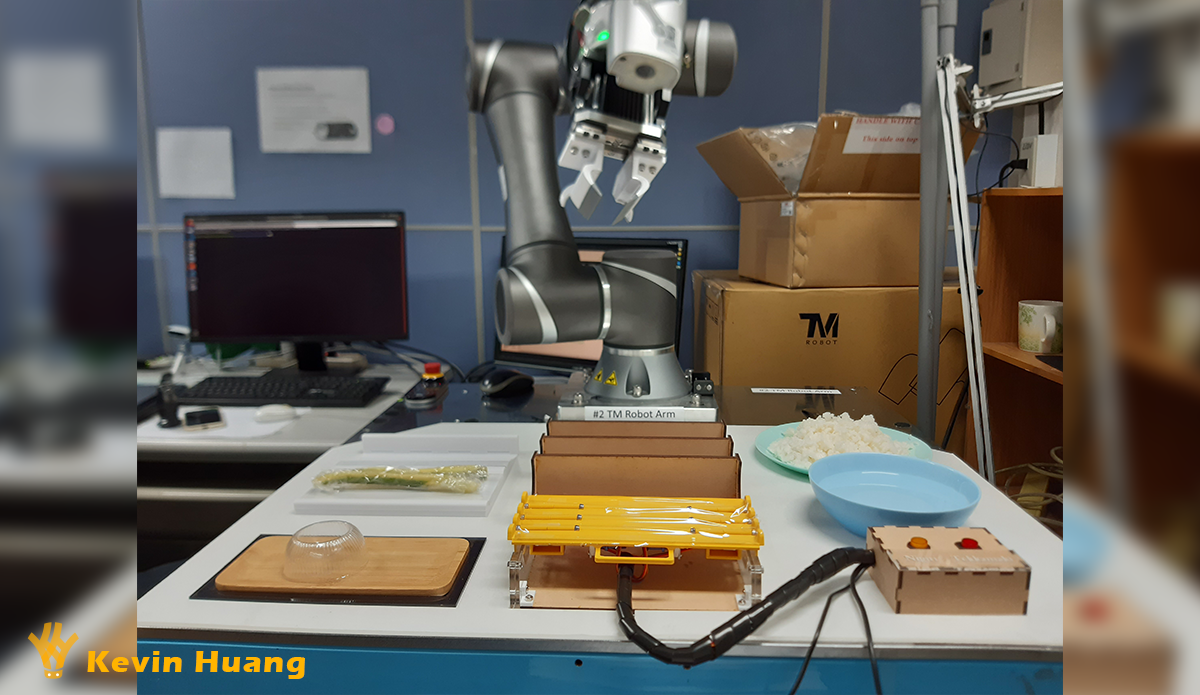
Sushiro-Bot is an automated sushi-making system built around a TM5-900 robot arm. It can prepare two types of sushi — nigiri and tekkamaki — end-to-end, from picking up ingredients to forming the final product. Custom 3D-printed hardware components mimic the hand motions of a sushi chef, while computer vision locates ingredients and checks sushi quality in real time.
Background
Most commercial sushi robots can only handle one task — either rolling maki or forming rice balls — and still require a human to assemble the final product. Sushiro-Bot handles the full workflow for both nigiri and tekkamaki automatically. The modular hardware design means it could be extended to other sushi types in the future.
System Overview
The workspace is arranged on an 800×800 mm table within the TM5-900’s 900 mm reach. From top to bottom, left to right, the components are:
- TM5-900 robot arm base
- Ingredient platform
- Serving plate
- Seaweed slots
- Operating platform
- Rice plate
- Water bowl
- Ordering box
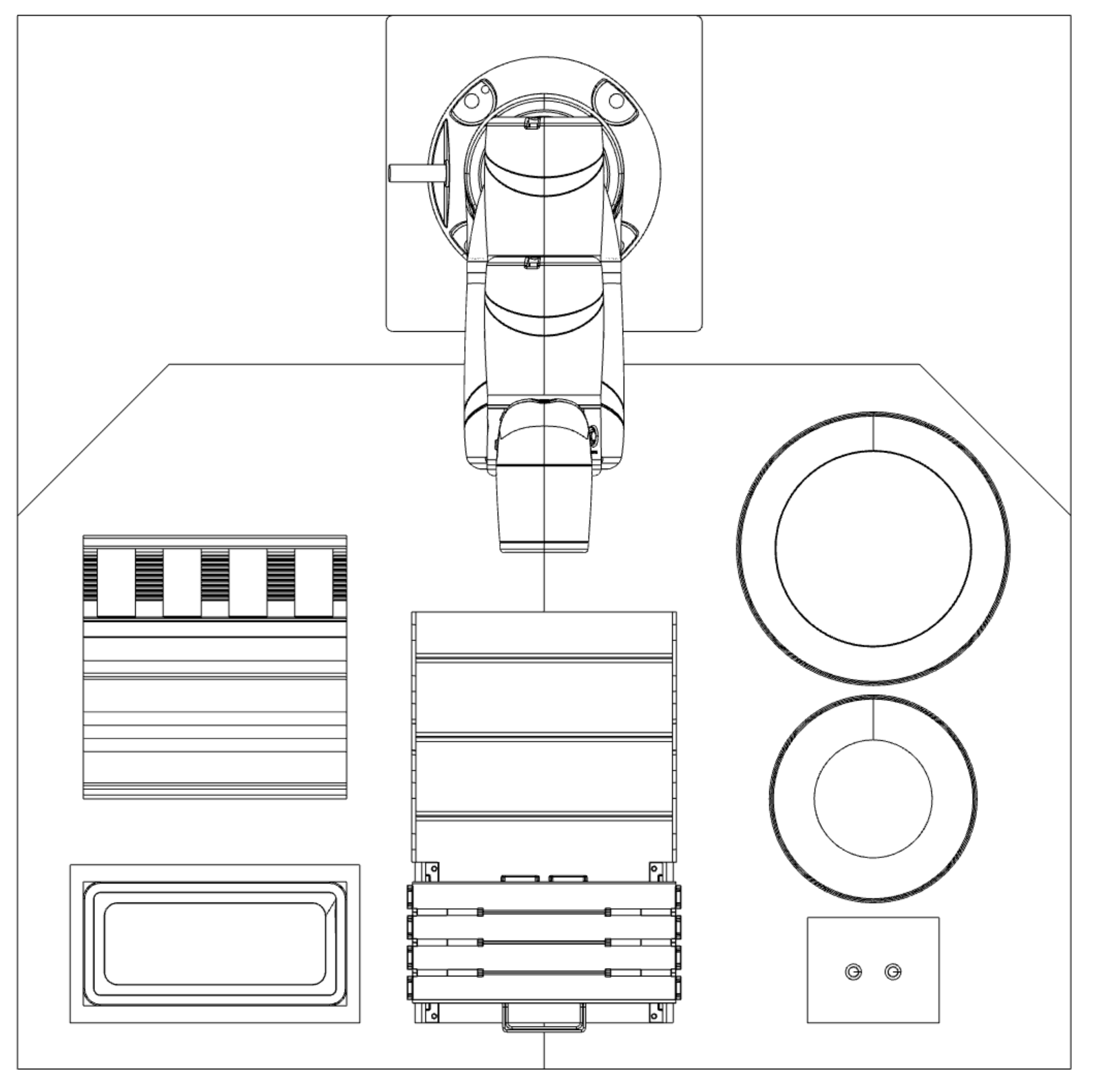 Component arrangement of Sushiro-Bot
Sushi-Making Process
The robot follows distinct workflows for each sushi type:
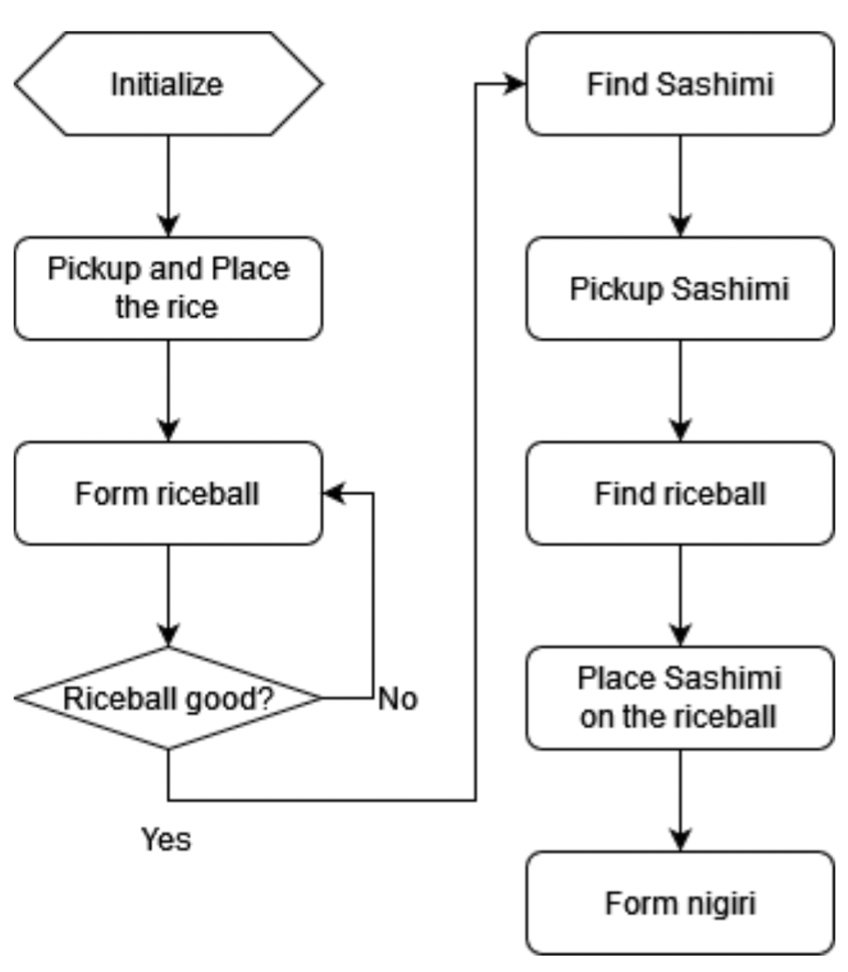
Nigiri: The gripper picks rice from the bowl, places it on the operating platform, and forms a rice ball. The camera checks the shape — if it’s not right, the gripper reshapes it. The arm then locates the sashimi, picks it up, and drapes it over the rice ball, similar to covering it with a quilt.
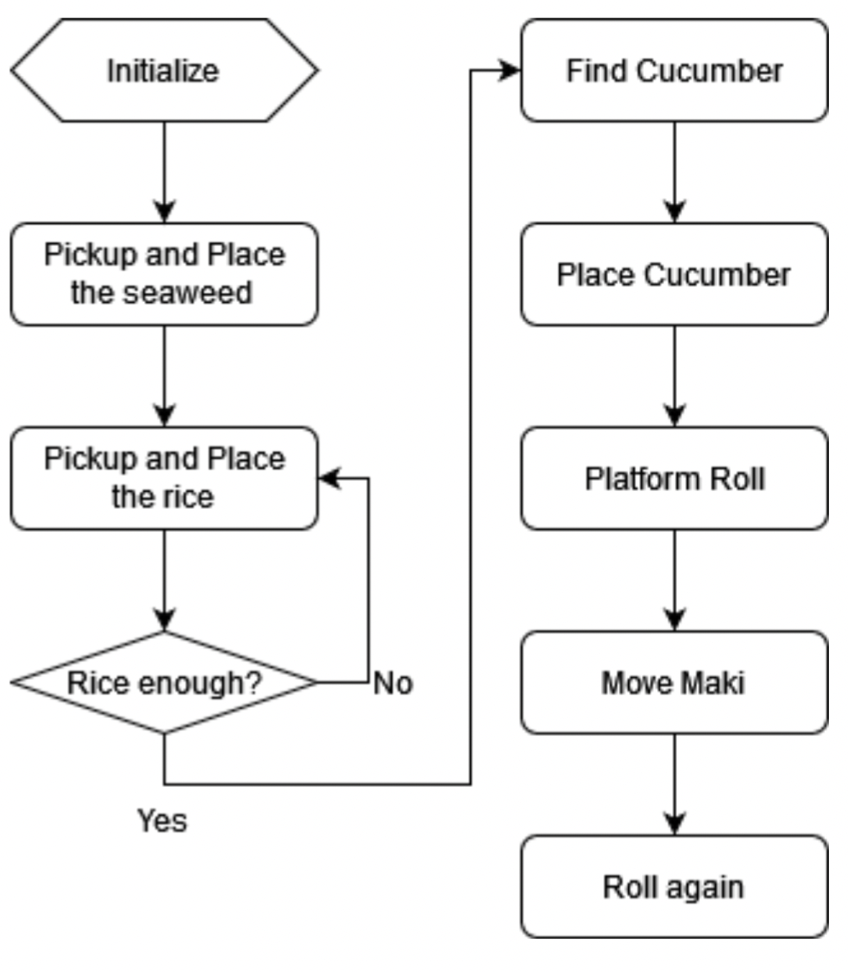
Tekkamaki: The gripper places a seaweed sheet on the operating platform, then repeatedly picks rice and spreads it across the seaweed (at least five passes). The camera checks coverage — if there are gaps, the gripper adds more rice. The arm then picks up cucumber and places it on top. Finally, the operating platform rolls the seaweed and rice into a tight cylinder, rolling twice on different surfaces.
| Nigiri flowchart | Tekkamaki flowchart |
|---|---|
 |
 |
Hardware Design
Ingredient Platform
The ingredient platform holds both block-shaped items (sashimi) and long items (cucumber, shrimp). It has two sections: an inclined plane with an anti-slip surface on the left for gripping sashimi from one side, and a flat surface on the right with enough width for the gripper to open and close. Both surfaces account for ingredient shape, texture, and length to ensure reliable gripping.
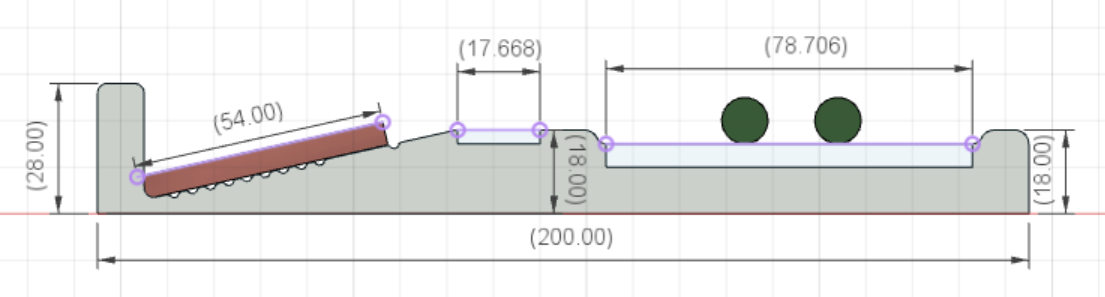
Ingredient platform dimensions
Ordering Box
The ordering box is the user interface — a simple device with an Arduino Nano and two buttons (one per sushi type). Pressing a button sends the order to the PC over serial.
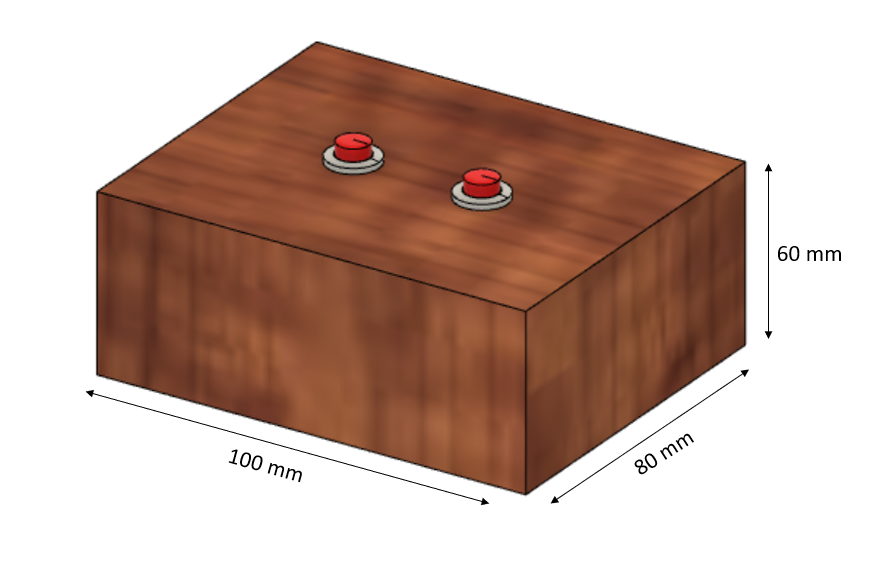
Ordering box
Seaweed Slots
Seaweed is flat, soft, and variable in size — difficult for a robot gripper to pick from a stack. We designed three slots, each holding one sheet of seaweed straight with moderate friction. The 60 mm slot spacing matches the gripper’s maximum opening to prevent collisions.
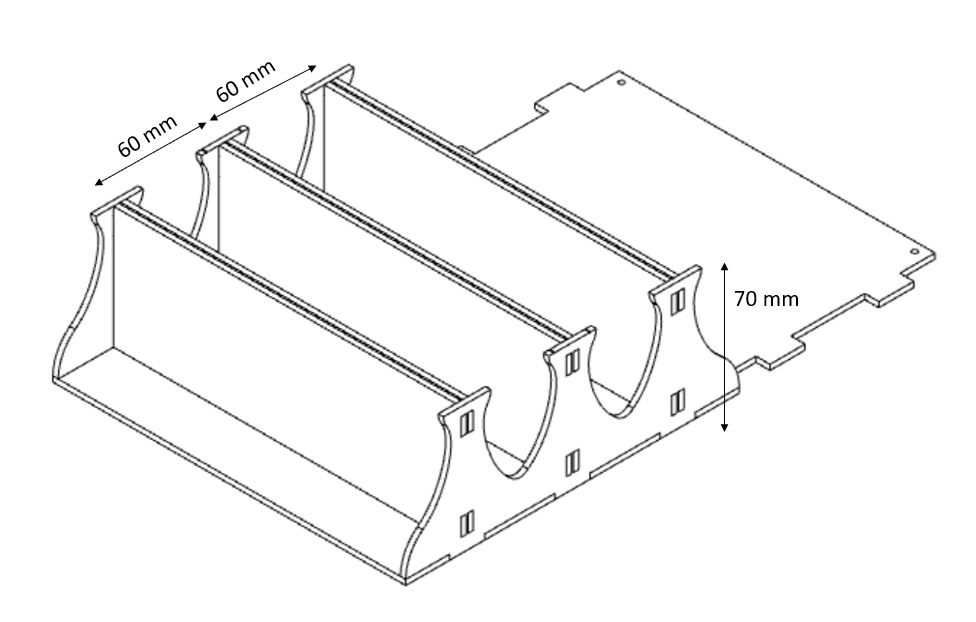 Seaweed slots and operating platform
Gripper
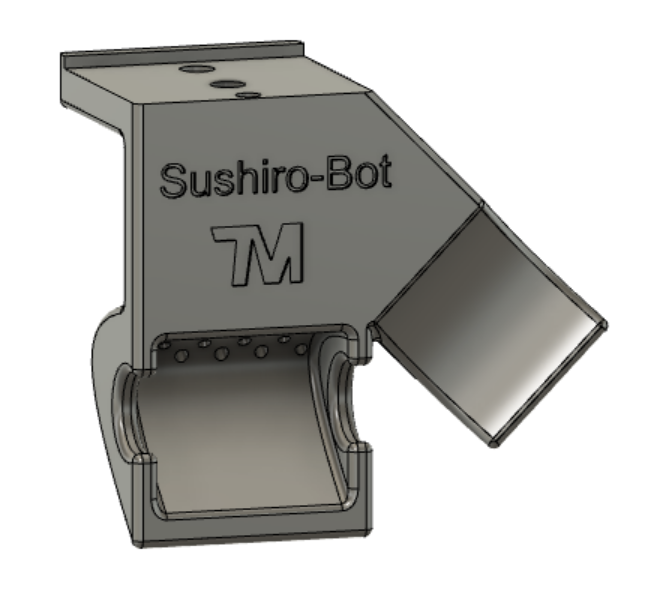
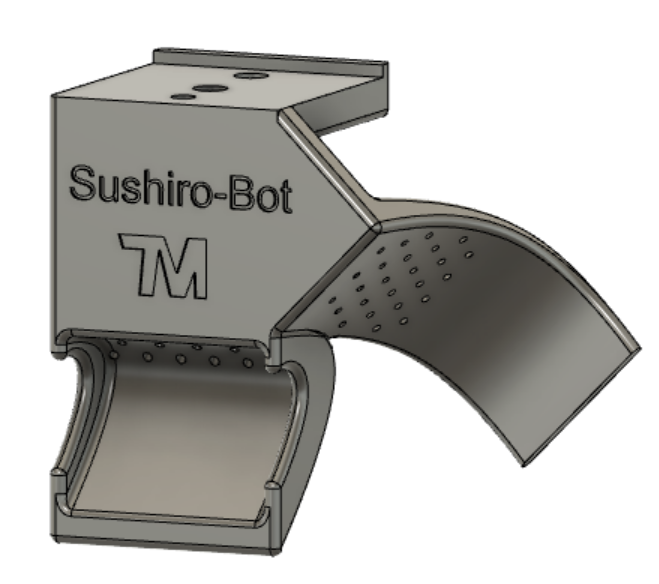
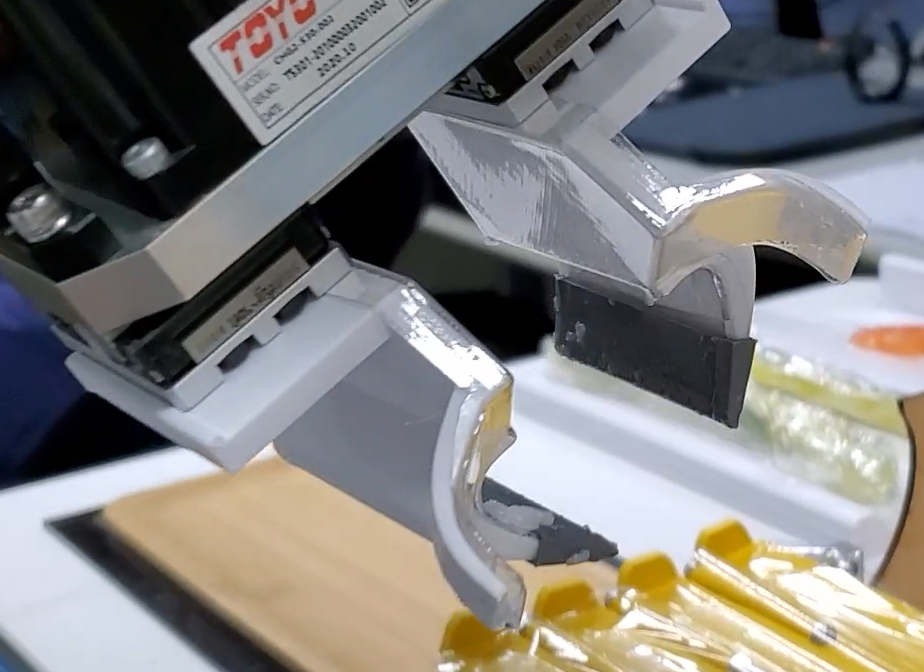
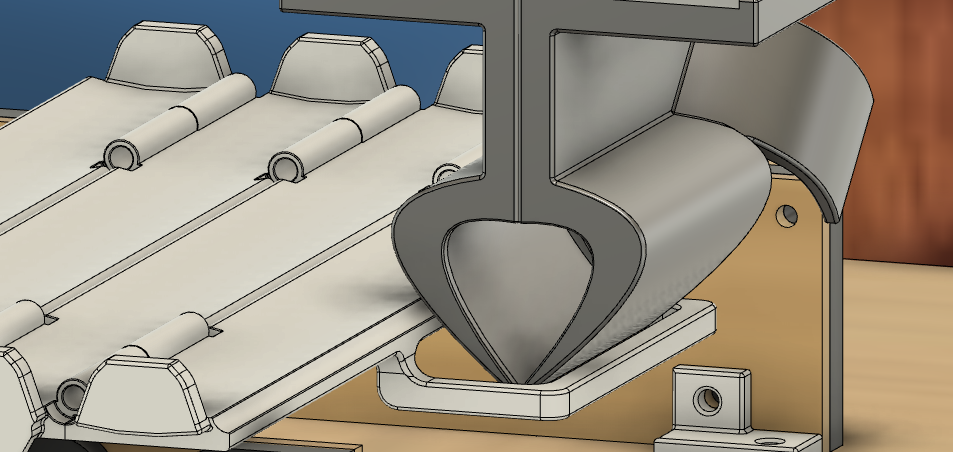
The gripper is the most versatile component. It must grasp rice, form rice balls, handle sashimi, seaweed, and cucumber, and also push/pull the operating platform along its rail. We went through three design iterations:
| Gripper v1 | Gripper v2 | Gripper v3 (final) |
|---|---|---|
 |
 |
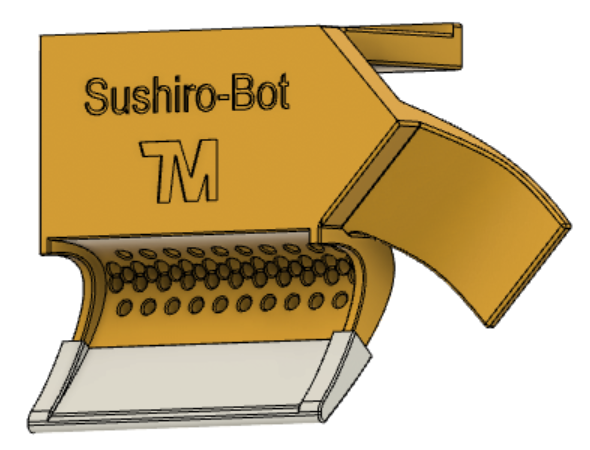 |
The left jaw is deeper with a larger volume for grabbing ingredients — a side hole lets long items stick out. The right jaw is shallower, designed for reshaping rice balls. A flexible sleeve (vacuum-molded in FLEX material) adds friction to prevent slipping and keeps rice from sticking.
Operating Platform
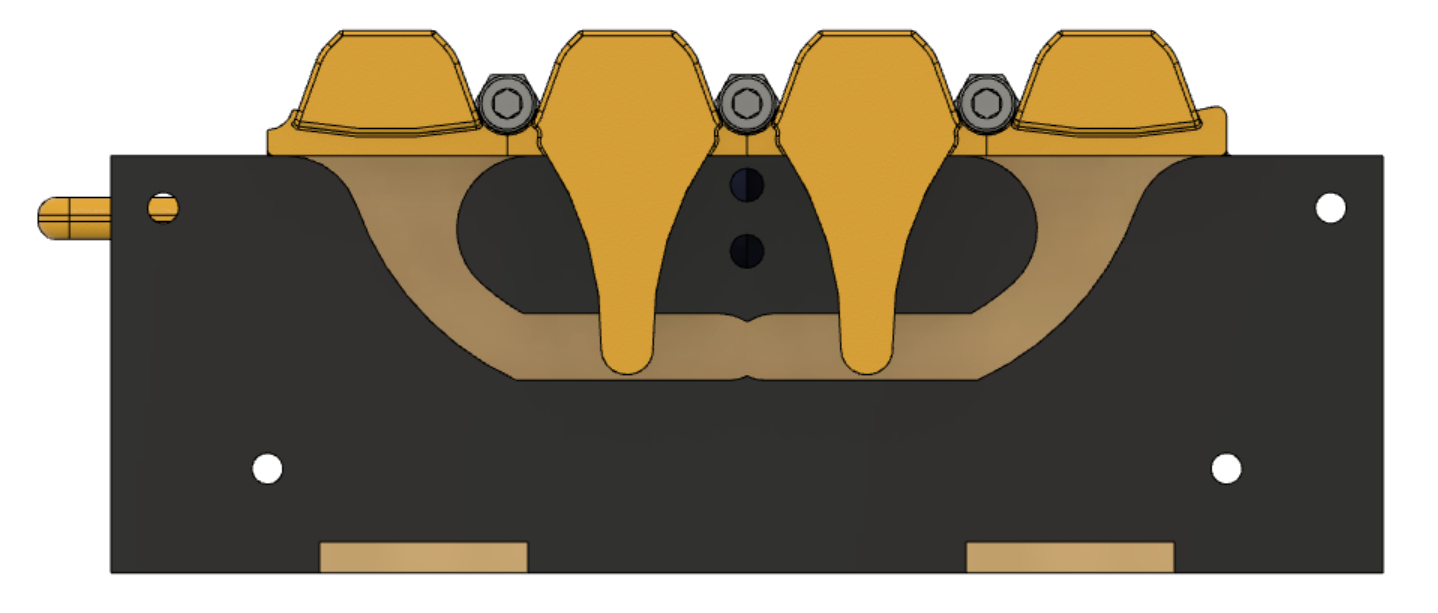
The operating platform is the primary workspace for forming and rolling sushi, designed to mimic a sushi chef’s hand motions and a traditional bamboo rolling mat. It consists of a base frame with a rail and four plates.
Each plate measures 200×23 mm, sized to match the length of tekkamaki and the width of a chef’s knuckles. The 50 mm plate curvature was determined through consultation with sushi chefs. Baffles on the sides prevent seaweed from shifting, and the plates are modular — they can connect in the middle for larger rolls.
| Platform side view | Platform top view |
|---|---|
 |
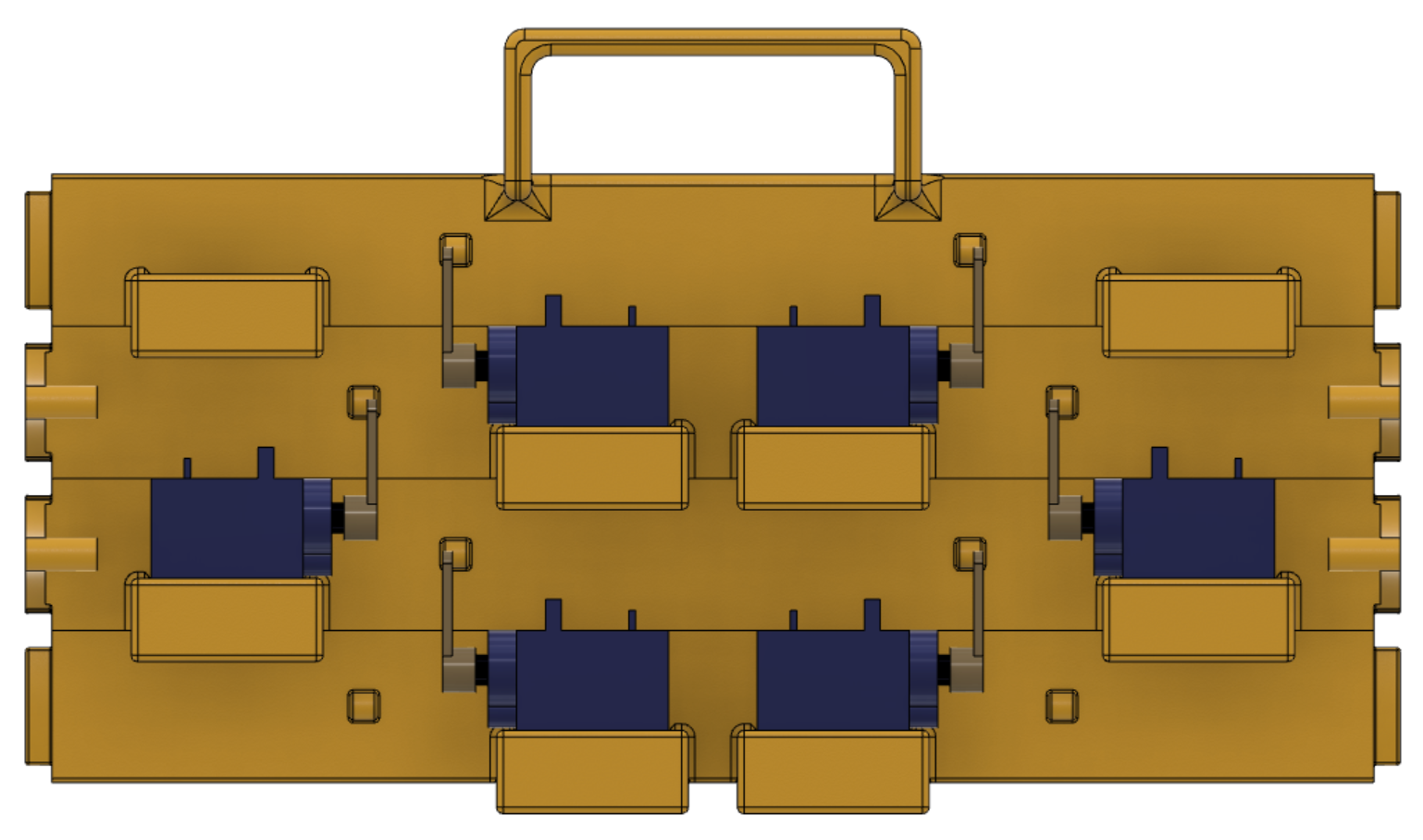 |
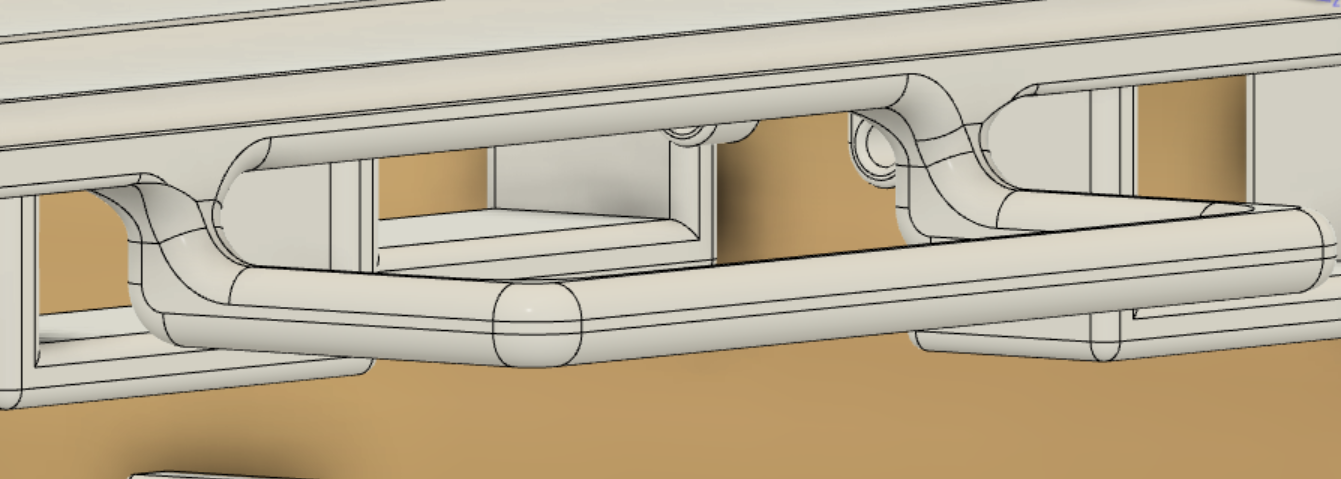
Six SG-90 servo motors and an Arduino Nano drive the platform. M3 screws serve as rotation axes with nylon nuts to prevent loosening. A pulley on the outermost plate initiates the rolling transformation, with fillets on the rail entrance to prevent misalignment.
| Rail and pulley | Gripper moving platform |
|---|---|
 |
 |
Computer Vision
Computer vision handles ingredient localization and quality checking. All images are converted from RGB to HSV, where hue and value reliably distinguish food from the platform background. Double-bounded thresholding binarizes each target.
Rice Ball Detection
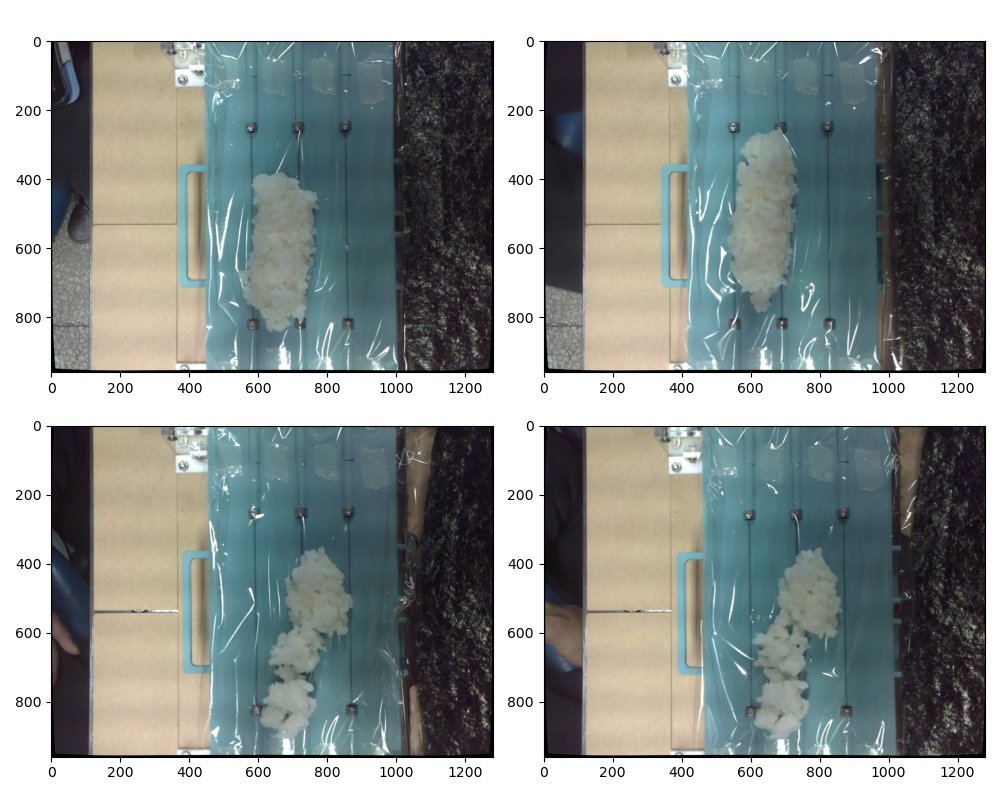
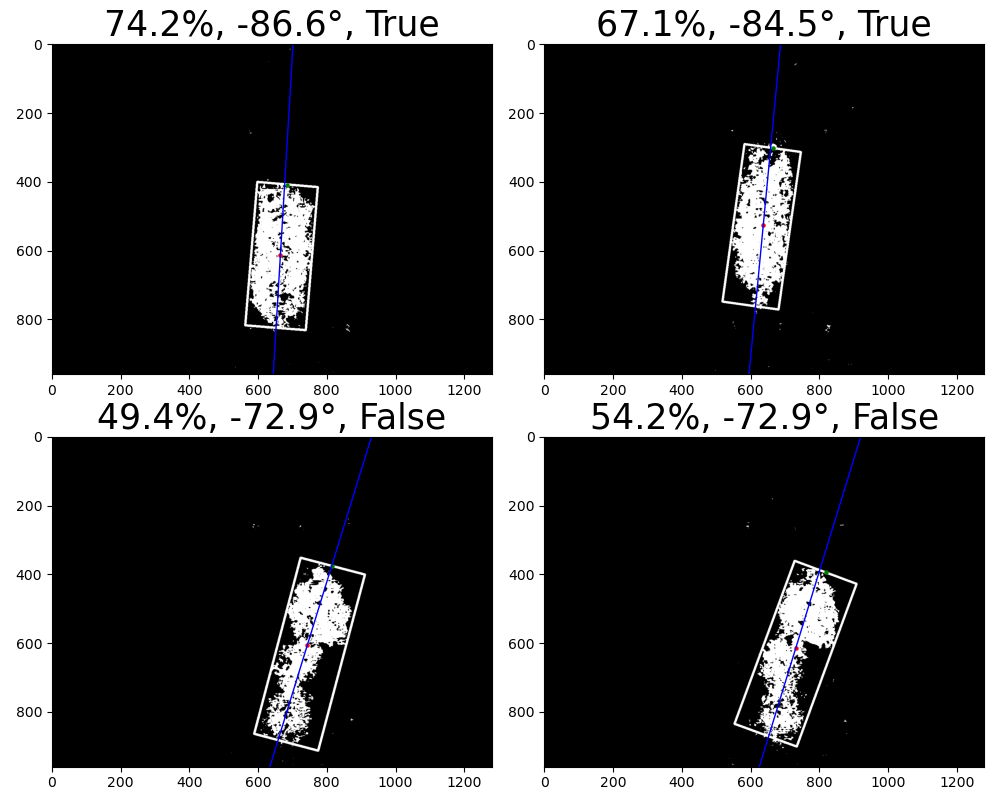
A qualified rice ball must meet three criteria: area exceeding 2433 mm², orientation angle within range (computed from image moments), and fill density above 75% of its bounding rectangle.
| Rice RGB | Rice mask |
|---|---|
 |
 |
Salmon Detection
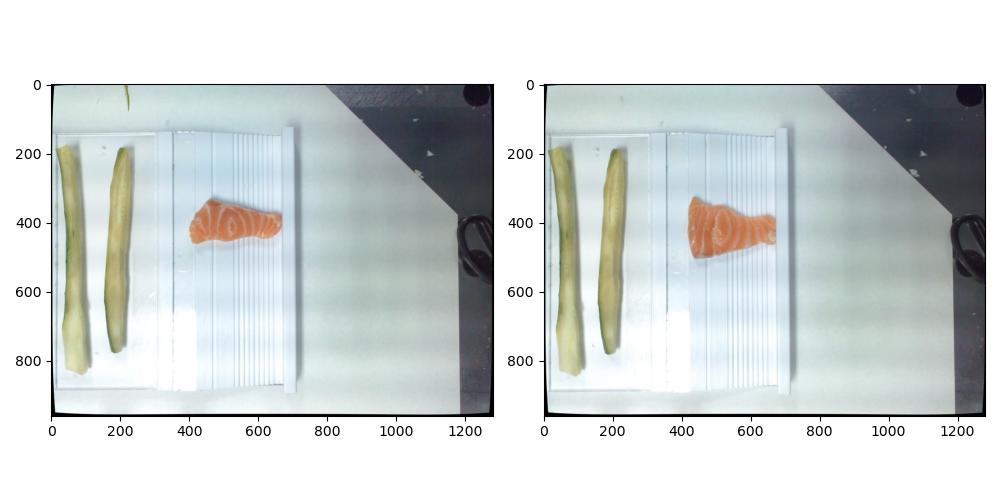
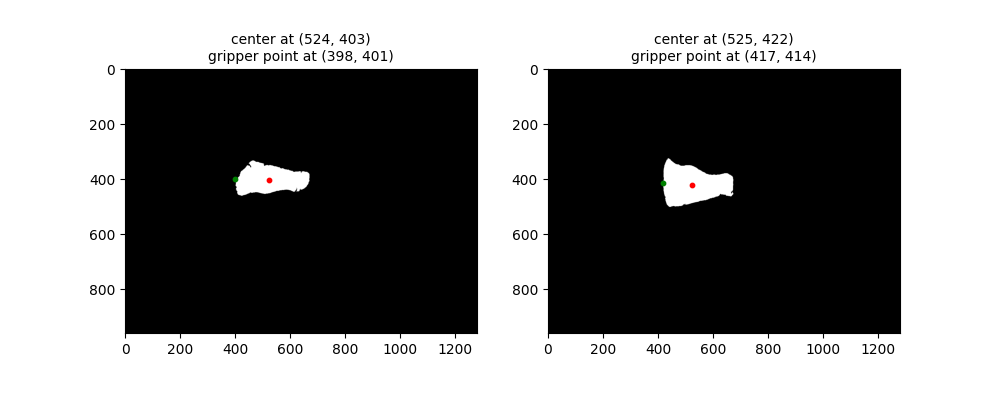
A qualified salmon piece must exceed 540 mm² in area. To avoid tearing the fish, the vision system detects the left edge and returns the midpoint to the gripper so it can pick up the salmon gently.
| Salmon RGB | Salmon mask |
|---|---|
 |
 |
Cucumber Detection
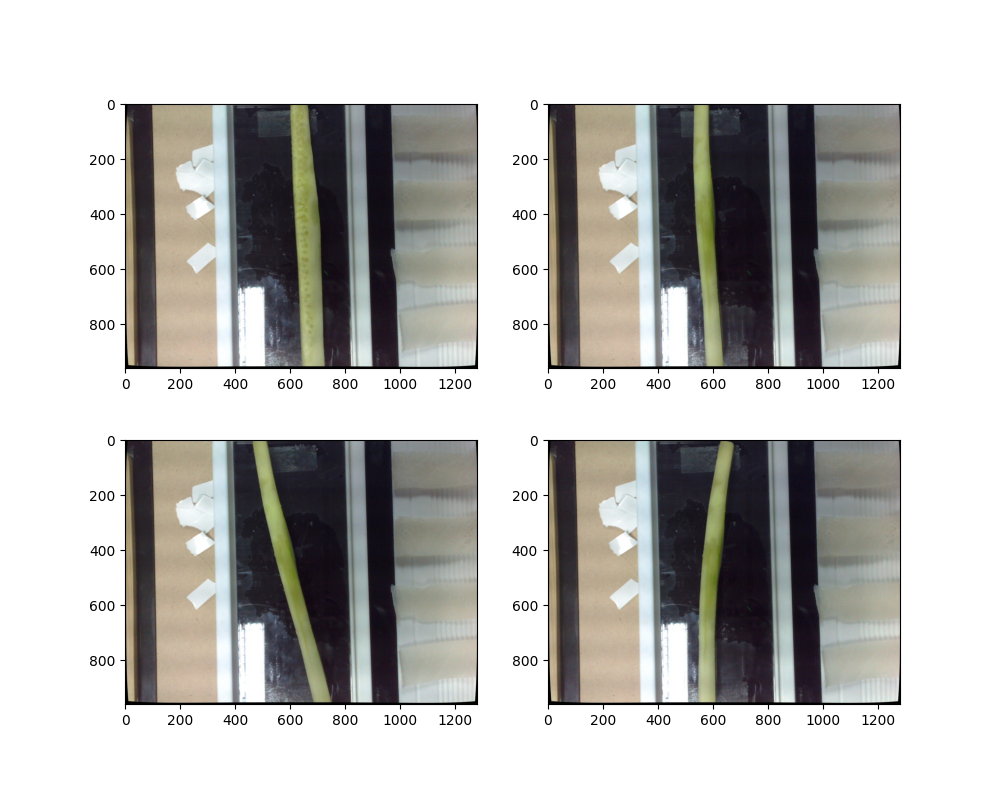
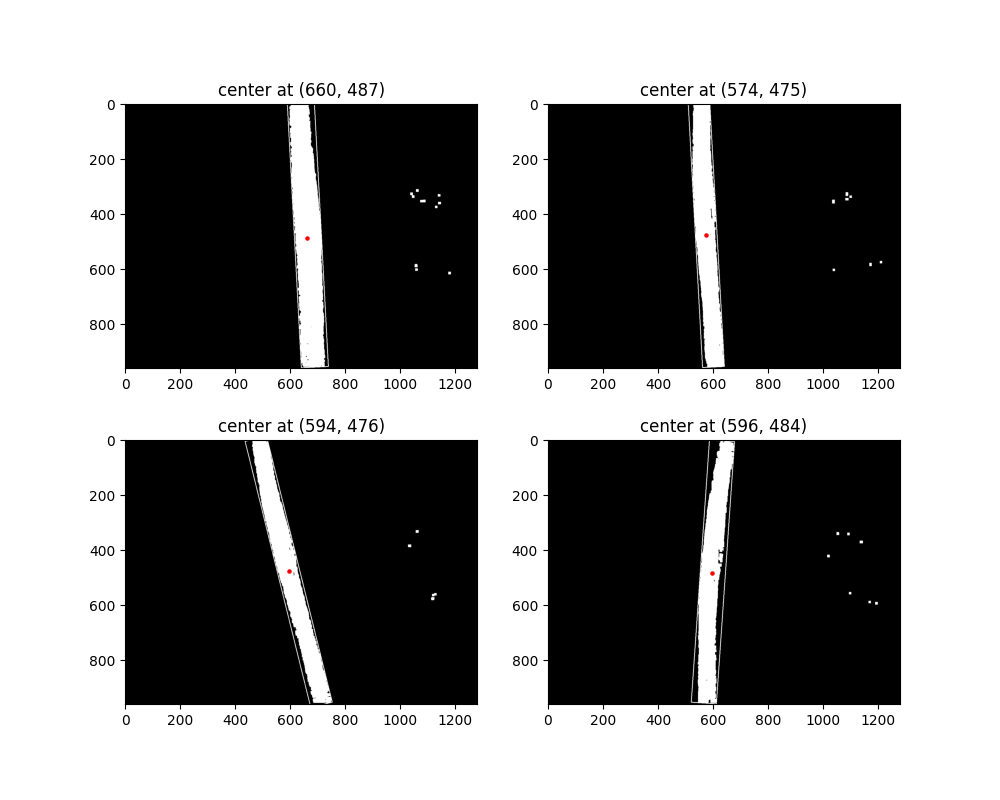
Cucumber is detected using the same HSV thresholding pipeline, with its center point computed from image moments.
| Cucumber RGB | Cucumber mask |
|---|---|
 |
 |
Rice & Seaweed Coverage
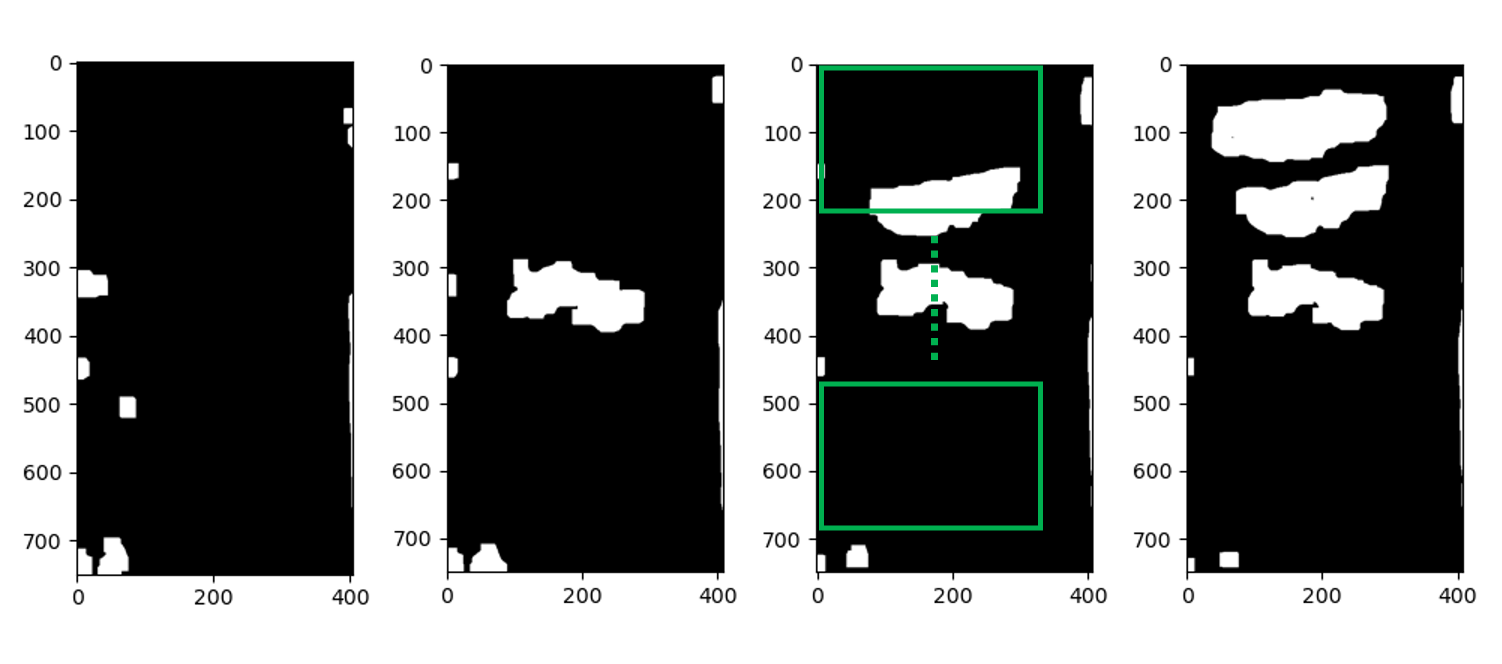
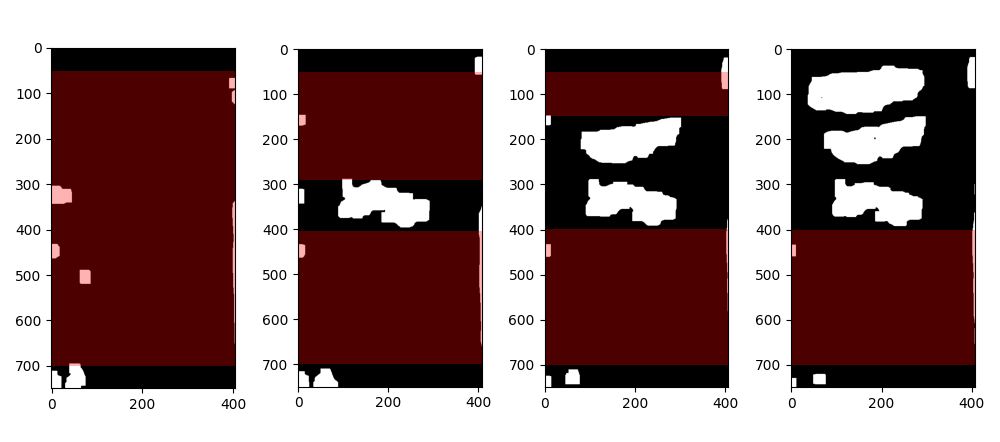
For tekkamaki, the camera checks whether enough rice covers the seaweed. The rice pile is modeled as a 3×3 grid; the system tracks the remaining height in each cell and directs the gripper to grab from the fullest cell. Bounding boxes mark regions below 15% coverage — the gripper adds rice to those spots.
| Rice coverage bounding box | Seaweed mask |
|---|---|
 |
 |
Control
The TM5-900 is controlled via ROS2 command scripts. Since the TM5-900 handles inverse kinematics internally, the focus is on precise target positions — computer vision provides ingredient locations, while static positions (water bowl, platform handle) are calibrated and hard-coded. The workspace is fixed on a laser-cut acrylic base plate to ensure repeatability.
The gripper washes itself in the water bowl between rice grabs — opening and closing periodically to shed sticky rice, with longer strokes while submerged and shorter vibrations above water to shake off droplets.
Experimental Results
The system successfully produces both nigiri and tekkamaki sushi.
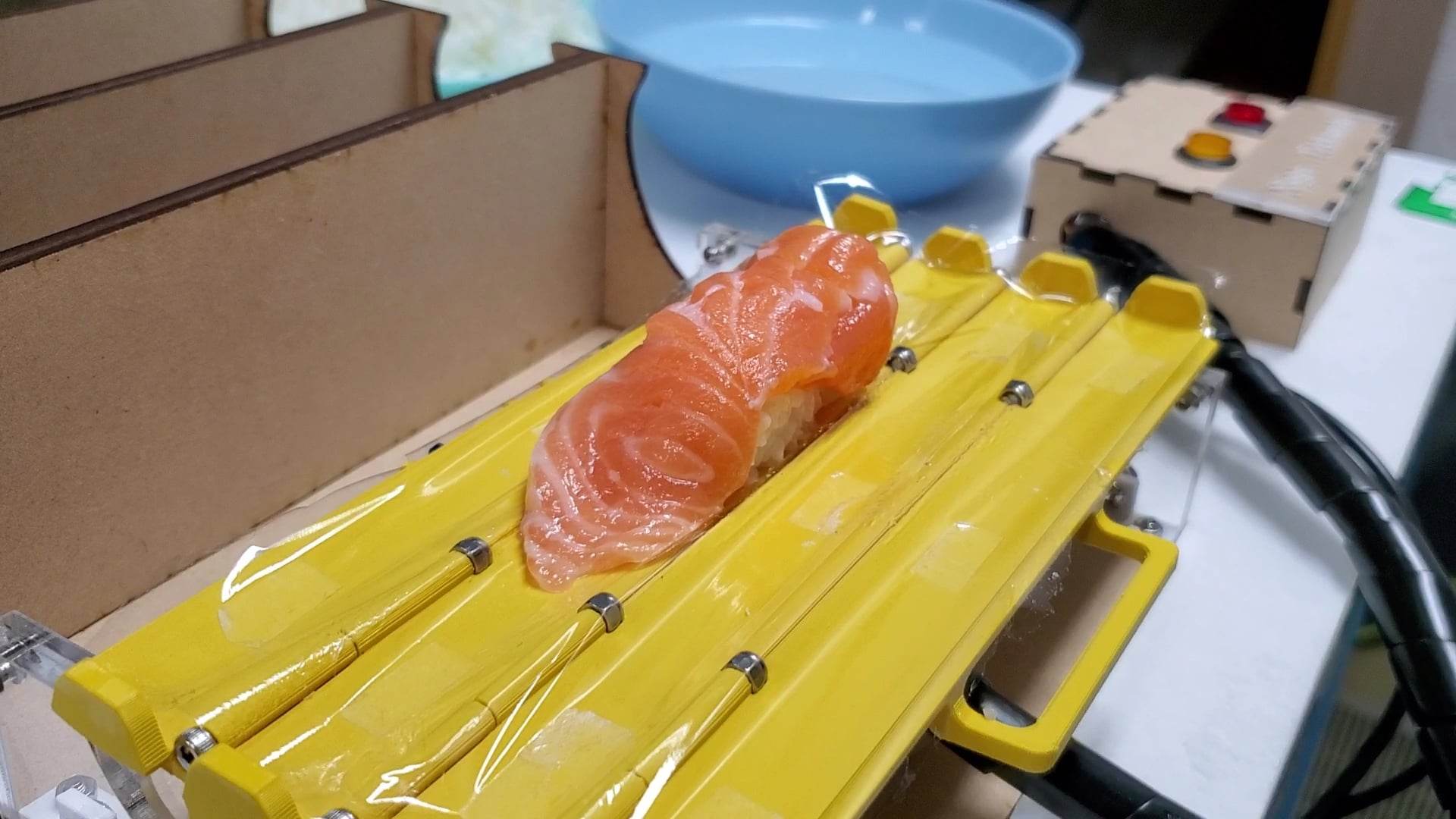 Nigiri result — salmon draped over a formed rice ball
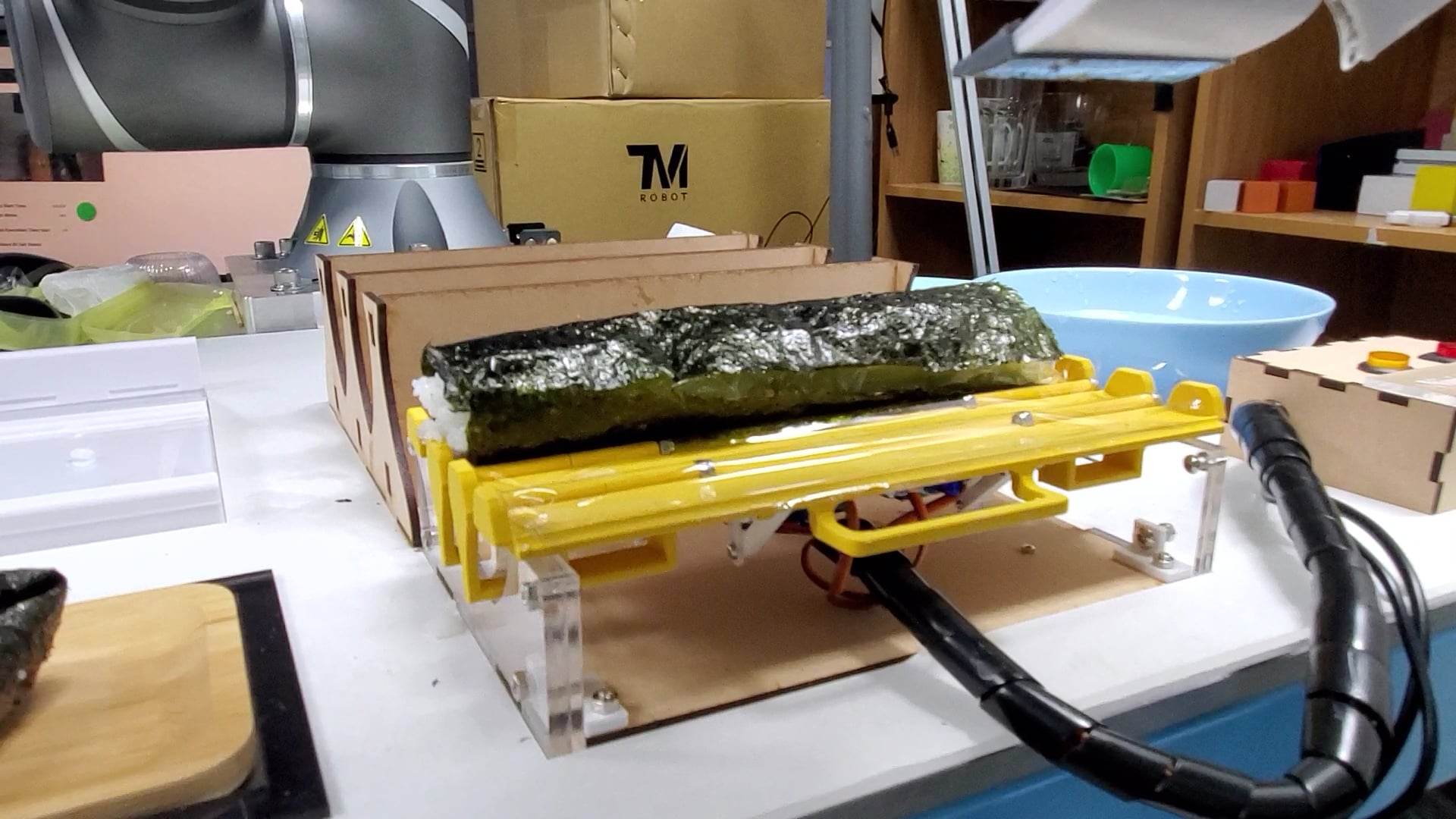 Tekkamaki result — tightly rolled with even rice coverage