
Maxie Bed - Smart Bed
A smart bed that actually gets you up — vibration, slapping, and tilting, controlled by ESP32 and computer vision
Maxie’s Bed
Maxie’s Bed was the final project for the Networking and Multimedia Laboratory course. As EE students, we were all too familiar with the struggle of waking up — one of our teammates even slept through an exam. So we built a bed that escalates its wake-up strategy until you have no choice but to get up.
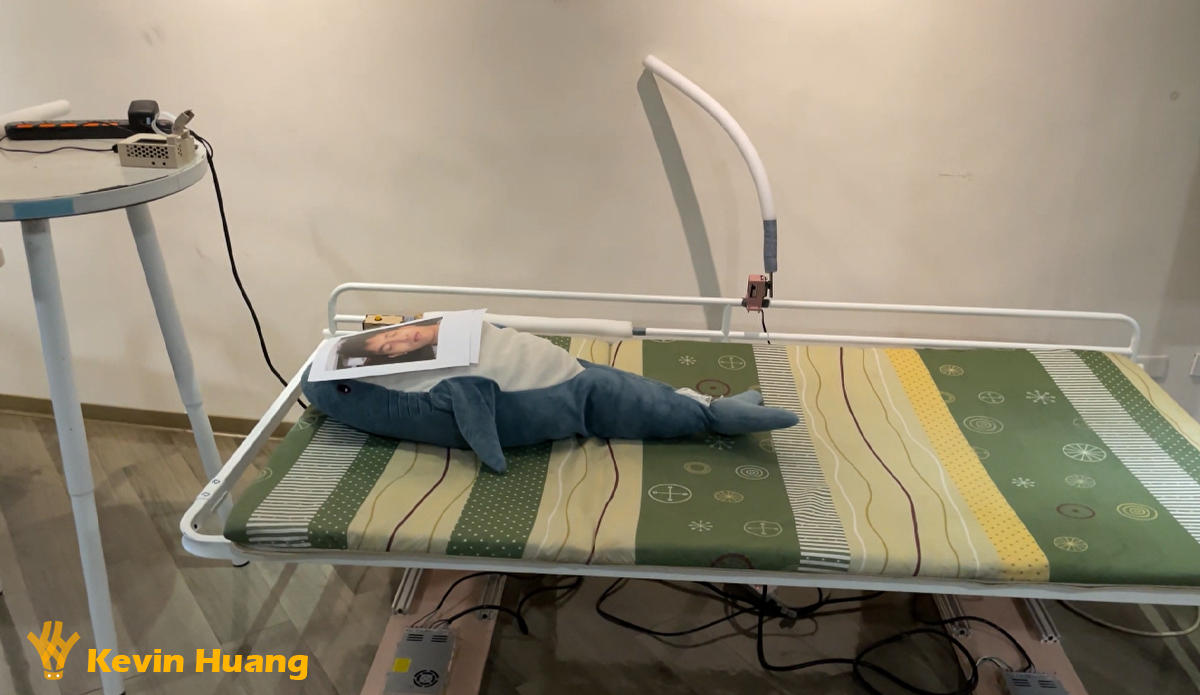
How It Works
The wake-up process has three escalating stages:
- Vibration — If you don’t get up within 60 seconds of the alarm, an eccentric motor shakes the bed.
- Slapping — If you’re still in bed, servo-driven thundersticks swing down and gently slap you awake.
- Tilting — As a last resort, two linear actuators tilt the entire bed frame, rolling you onto the floor.
A camera mounted above the bed streams video to a Jetson Nano, which runs a sleep detection model (powered by Amazon cloud services with hardware acceleration) to determine whether the person’s eyes are open or closed. The system only stops escalating once it confirms you’re actually awake.
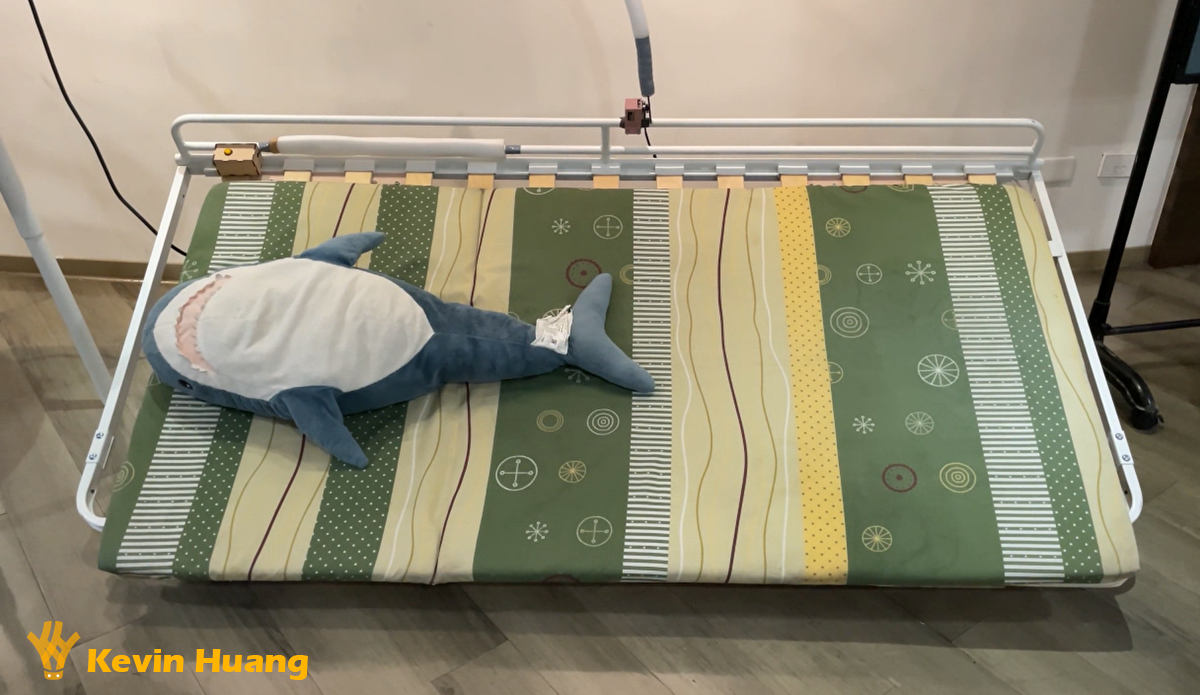
The bed after tilting — the occupant (represented by a shark plush) has been evicted
Hardware
The bed frame was designed in CAD and built with a slatted platform on a steel frame. Two linear actuators handle the tilt mechanism, an eccentric motor provides vibration, and a servo motor drives the thunderstick arms. Everything is controlled by an ESP32 that communicates with the Jetson Nano over Bluetooth. We also built a web interface for setting the alarm time.
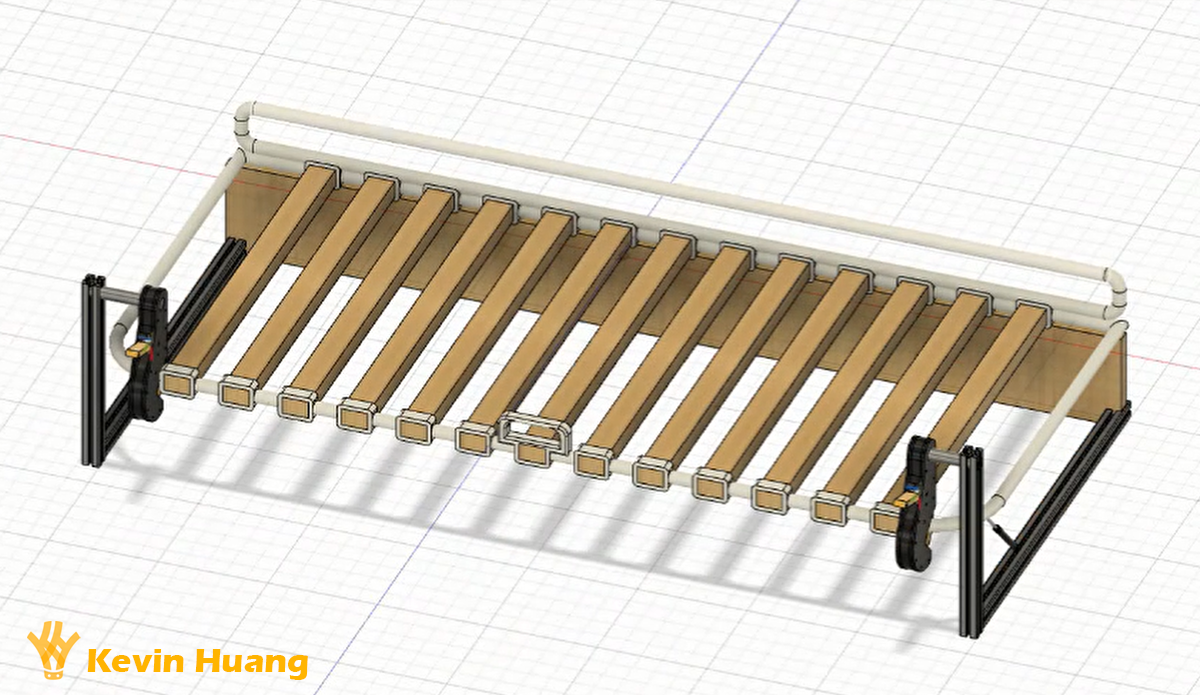
CAD model of the bed frame with linear actuators and slatted platform